
Copyright 2024 ORICAL LLC - Partner - Florio Leahy LLP (Affiliated Law Firm, Attorney Advertising)
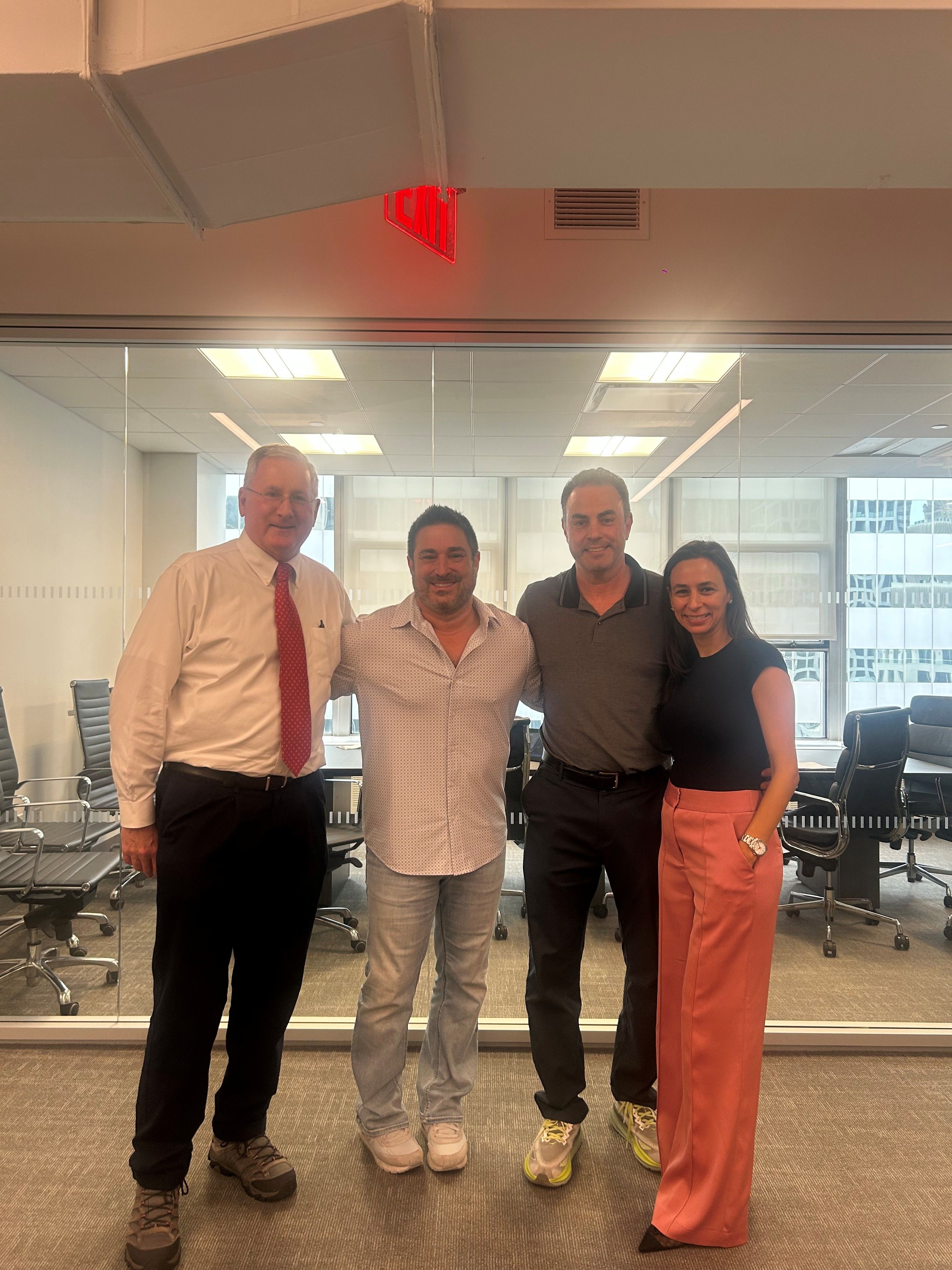
An engaging discussion on current regulatory developments, SEC priorities, and practical compliance considerations for investment managers, featuring insights from industry professionals on navigating today's evolving regulatory landscape.
Date & Time
Location
Duration
SEC Scrutiny Is Evolving — But the Fundamentals Still Matter
At Orical’s recent Regulatory Breakfast Briefing, investment managers, compliance professionals, and industry service providers gathered to discuss the evolving SEC landscape and what it means for advisers navigating examinations, enforcement risk, operational oversight, and compliance obligations in today’s environment. The discussion focused not only on where regulators appear to be directing their attention, but also on the practical realities firms face when translating legal and compliance requirements into day-to-day operations.
The discussion featured Orical and Florio Leahy partners Vanessa Sasson, Jim Leahy, and Greg Florio, alongside special guest Eric Schultz of Reliant Fund Services. While participants acknowledged a noticeable shift in tone at the SEC under new leadership, the consensus was clear: firms should not mistake a change in approach for a reduction in regulatory expectations.
“What’s changed and what hasn’t?” Sasson asked at the outset of the discussion. While the SEC may be recalibrating certain priorities, investment advisers still need to be prepared for rigorous examinations and maintain strong compliance programs. The panel noted that the current regulatory environment appears increasingly focused on investor harm, fiduciary breaches, valuation issues, conflicts of interest, and fee and expense practices, rather than technical violations that do not directly impact investors.
Leahy highlighted the SEC’s continued focus on core investor protection principles, noting that regulators remain closely focused on valuations, disclosures, custody safeguards, and conflicts of interest. One area receiving particular attention is whether firms are doing exactly what they told investors they would do. “They’re really interested in going after fraud,” Leahy observed, adding that regulators have repeatedly emphasized the distinction between honest mistakes and intentional misconduct.
The panel also discussed how examination priorities increasingly appear to be converging with enforcement themes. While regulators may be moving away from some of the more novel or technical enforcement theories seen in prior years, the SEC continues to focus heavily on areas involving investor impact, including fees and expenses, valuation practices, conflicts of interest, Marketing Rule compliance, recordkeeping, off-channel communications, and the handling of material nonpublic information. Panelists noted that many enforcement matters still originate from what initially appear to be operational or disclosure deficiencies identified during examinations. Firms therefore cannot view compliance, operations, and legal oversight as separate functions.
A recurring theme throughout the conversation was consistency. Regulators are increasingly comparing disclosures across offering documents, Form ADV filings, marketing materials, investor communications, diligence responses, and operational practices. What may appear internally as a minor discrepancy can be viewed by examiners as a sign of broader governance or disclosure weaknesses. As Sasson noted, the SEC is conducting a far more holistic review of firms and their disclosures than many managers appreciate. Several panelists observed that the SEC appears increasingly focused on whether firms’ actual practices align with the story being told to investors across all touchpoints.
Operational readiness was another major focus of the discussion. Schultz explained that many examination issues arise not because firms lack policies, but because processes break down between managers, administrators, auditors, and other service providers. “The best way to navigate any SEC audit is to bring in the right partners from day one,” he said, emphasizing the importance of coordination among compliance, legal, accounting, and operations teams. He also noted that examination activity appears to be accelerating, with some newly launched managers receiving inquiries far sooner than expected.
The panel also discussed the practical challenges of translating legal language into operational reality. Fund documents often contain complex fee calculations, waterfalls, and offset provisions that administrators must convert into mathematical formulas and operational workflows. As Schultz joked, lawyers’ draft documents in “English — or sometimes lawyer-ish” — while administrators are left determining how those provisions function in practice. The exchange underscored a broader point: many regulatory and operational issues can be avoided when legal, accounting, and operational teams collaborate before documents are finalized, rather than after problems emerge.
Documentation was another key area of focus. Strong compliance programs remain essential, but firms also need evidence demonstrating that policies are being implemented, tested, and followed. Meeting minutes, approvals, surveillance reviews, valuation committee records, and compliance signoffs all help demonstrate that controls are functioning as intended. As Leahy noted, sometimes a simple email stating “approved” can make all the difference when examiners ask firms to substantiate a process.
The discussion concluded with a practical message for managers preparing for future examinations and regulatory scrutiny more broadly: focus on fundamentals. Do what you say you are going to do. Review disclosures, test controls, conduct mock examinations, revisit valuation and fee methodologies, and ensure records can be produced quickly and accurately. In an environment where examinations and enforcement activity appear increasingly targeted and efficient, operational discipline is no longer simply a compliance function — it is a business imperative.
Questions That Got the Room Talking
Can an adviser be liable for a cybersecurity breach at a third-party vendor?
The panel explained that regulators will likely focus on whether the adviser conducted appropriate due diligence, obtained necessary contractual protections, and followed established incident-response procedures once notified of a breach.
How often should firms conduct a mock SEC examination?
A recurring recommendation was every few years, particularly following periods of growth, operational change, or significant regulatory developments.
What is one of the most overlooked examination risks?
Documentation. Firms often perform the right compliance activities but fail to maintain sufficient records demonstrating those activities occurred.
What causes the most operational headaches?
Unsupported allocations, inconsistent assumptions, and situations where no one can clearly explain how a reported number or fee was calculated. Regulators may tolerate mistakes; they are far less tolerant of confusion.
What was the panel’s simplest takeaway?
Do what you say you are going to do — and document that you did it.